WINNEMAC PARK
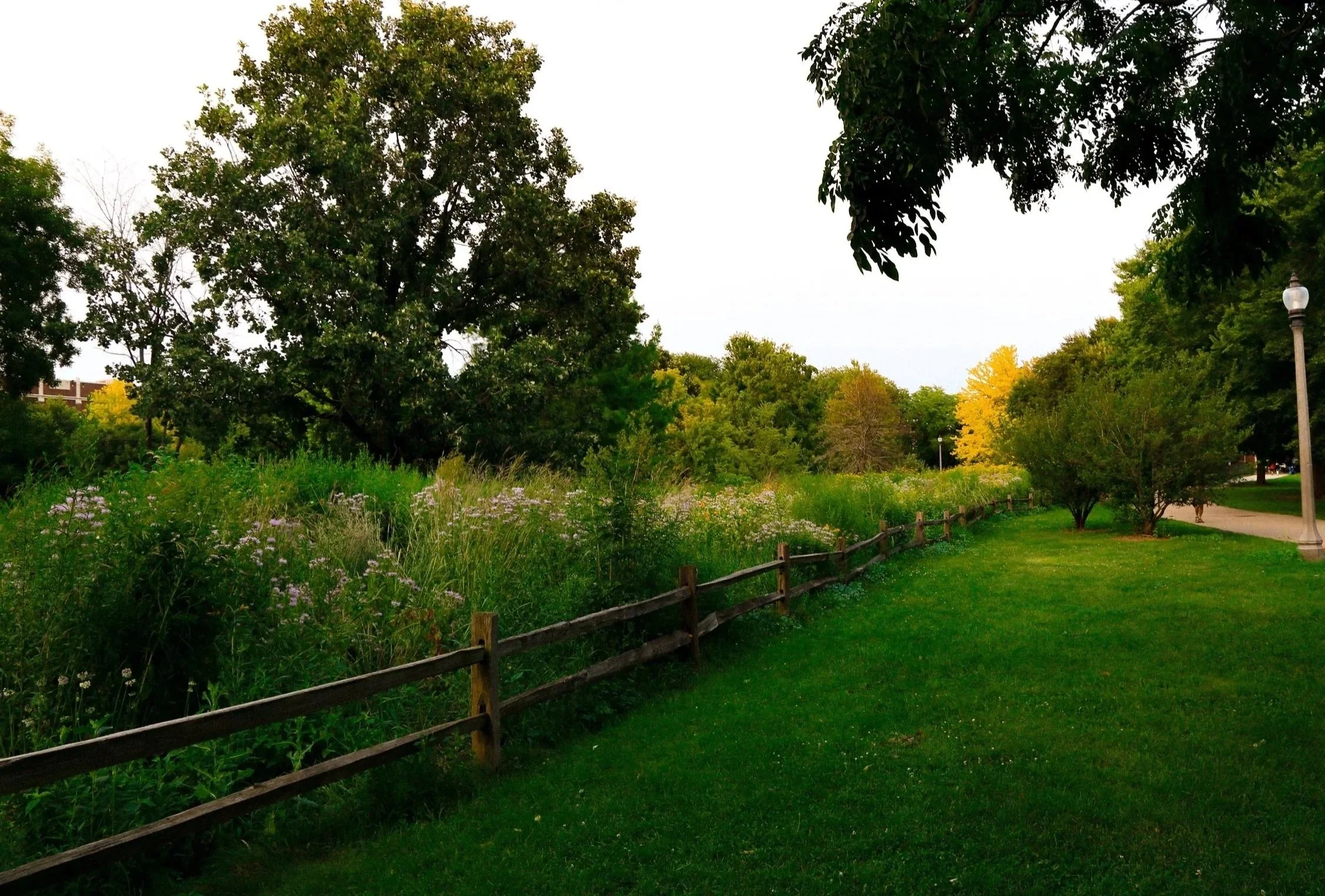
Winamac (Bodéwadmi for catfish) was a name carried by several Potawatomi leaders of the Fish Clan. This park is named for a US-allied "alliance chief" navigating a challenging position: he led the delegation that ceded land at Fort Wayne (and received a federal annuity for it), carried Hull's order to evacuate Fort Dearborn in 1812, and signed the Treaty of Fort Meigs in 1817. Alliance was one of the few strategies available to Potawatomi leaders facing an expanding United States, and it cost him standing among his own people without securing anything durable from the Americans. By 1833 the Potawatomi were forced west under the Treaty of Chicago, and there are now federally recognized bands Michigan, Wisconsin, Kansas, and Oklahoma.
With the arrival of European settlers, the wet prairie here was plowed and drained for agriculture. The land eventually passed to Chicago’s Board of Education, which leased it to farmers and sat on it until 1910, when it was graded into a park. Amundsen went up in 1929, Chappell in 1937, and the site has been jointly owned by the Chicago Park District and Chicago Public Schools ever since.
The Natural Areas here are not yet thirty years old and carry over fifty species of wildflowers: one of the District's most successful restorations. It is supported by a strong network of local volunteers, students, and neighbors serving as stewards and maintaining a collective relationship to the land. It is quite literally a commons: held together by ongoing, distributed labor.
MARIAN BYRNES PARK
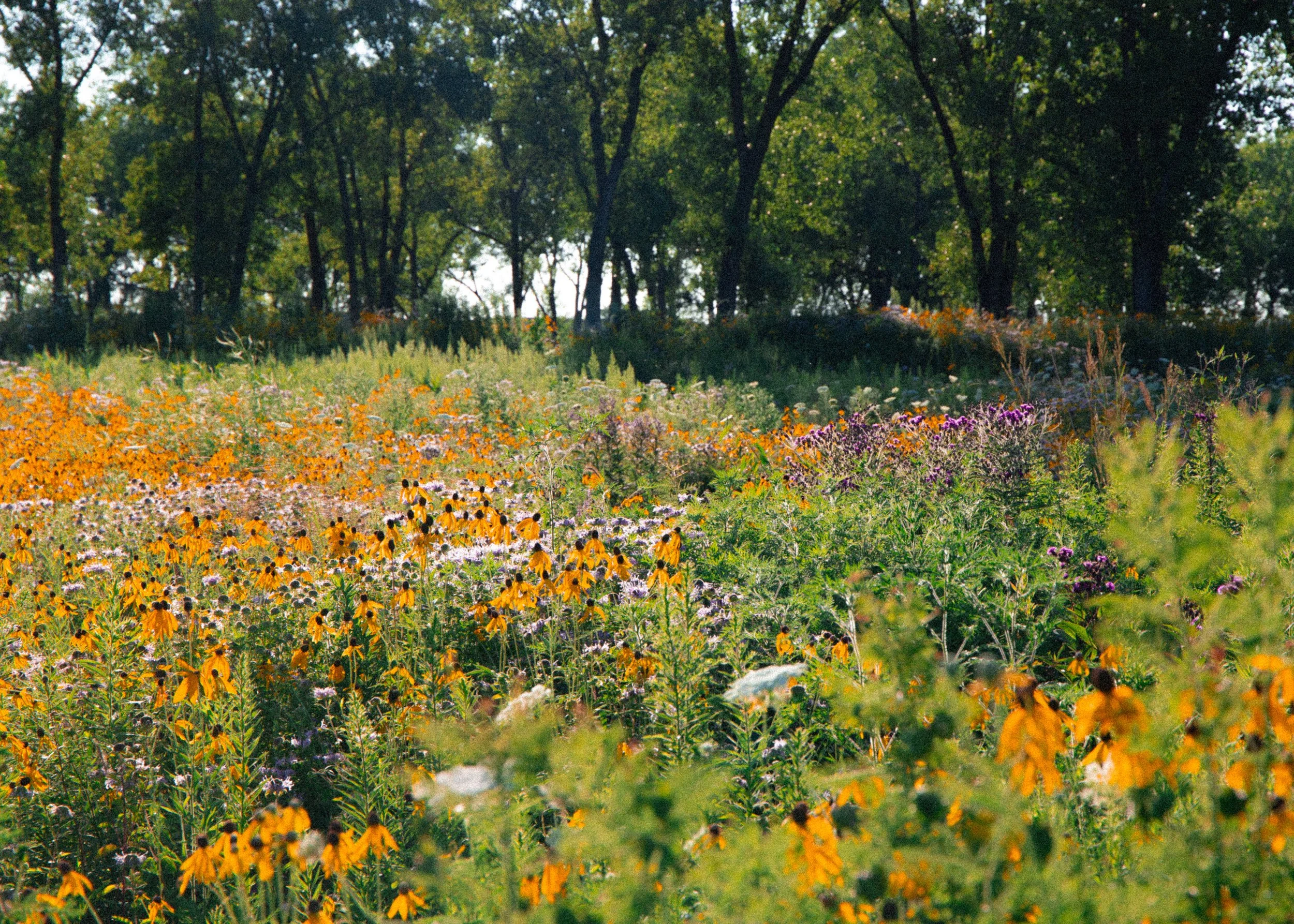
Lake Calumet was once a shallow glacial lake ringed by one of the most diverse wetland complexes on the continent. Over the course of the 20th century, that complex was systematically dismantled and transformed: The Cal-Sag Channel reversed the Little Calumet away from Lake Michigan in 1922, the lake was dredged for a port that never arrived, and the marshes were filled with steel slag, municipal garbage, industrial waste. Cook County lost roughly forty percent of its wetlands that century: much of it here.
This 140-acre strip along the railroad (once know as “Van Vlissingen Prairie”) was slated to become a CTA bus depot in 1979. Marian Byrnes, a neighborhood teacher, organized against it and won. Years of restoration followed, including the brand-new trail system you see today.
Where the mills dumped slag, something unplanned is happening. Ecologists surveying the resulting brownfields (an informal group calling themselves the "Slag Queens") regard them as a novel ecosystem type now known as “Chicago slag barrens”, where rare plants grow. Capitate spike-rush (Eleocharis geniculata), last recorded in Illinois in 1894 and presumed locally extinct, is found growing on the slag there. Other areas of the site are ephemeral wetland: wet enough for tadpoles, too shallow for fish, and full of native plants and animals. The question is not how to restore the site to a “pristine” prior state, but how to work with what the place has become.